If you look at Pemberton Heights and wonder why values can sit so far above the broader Austin market, the short answer is that this is not a typical neighborhood. It is a small, historic, close-in submarket where location, lot character, and architectural integrity all carry unusual weight. If you are buying, selling, or simply trying to understand pricing here, it helps to know what the market is really rewarding. Let’s dive in.
Pemberton Heights Is a Scarce Market
Pemberton Heights sits within the Old West Austin National Register Historic District, a designation the City of Austin says was accepted in 2003. The district includes about 1,600 homes and 2,500 buildings, and the Pemberton Heights neighborhood association describes Pemberton Heights itself as having 613 residences. In practical terms, that means you are looking at a small, established housing supply in a central Austin location that cannot easily be replicated.
That scarcity shows up in the sales data. Homes.com currently shows 12 home sales over the last 12 months and 8 homes for sale, while Zillow’s sold page shows 10 recent results. When the transaction count is that low, one or two unusual sales can shift neighborhood averages quickly.
This is also why broad Austin numbers can be misleading here. Homes.com reports a 12-month median sale price of $2,696,250 in Pemberton Heights, compared with the City of Austin median sale price of $573,750 in April 2026 and the Travis County median of $505,000. If you are pricing a home or evaluating one as a buyer, the better approach is to compare against the closest neighborhood matches, not the citywide median.
Central Location Supports Demand
One of the biggest reasons Pemberton Heights holds value is simple: you are very close to the core of Austin. The neighborhood association says it is less than two miles from the University of Texas, the State Capitol, downtown, and the main medical center area. It also notes that Whole Foods, Central Market, and Trader Joe’s are all within two miles.
That kind of access matters because it combines convenience with an established residential setting. Buyers are not choosing between urban proximity and neighborhood character here. In many cases, they are trying to get both at once.
For sellers, this means location is doing more than adding convenience. It is helping create a value floor that comes from daily livability and long-term desirability in a close-in Austin setting.
Lot Size Has Outsized Importance
In Pemberton Heights, the land itself often carries more influence than buyers expect. Homes.com shows a median lot size of about 9,147 square feet, or roughly 0.21 acres. In a central Austin neighborhood, that amount of land is meaningful.
Larger lots can create a sense of separation, deeper front yards, and more privacy than you often see in denser close-in areas. Those features are not just aesthetic. They shape how the home lives day to day and how the street feels as a whole.
The City of Austin-hosted Old West Austin district document says the area was originally developed on large parcels, with low-density residential development, limited access to exterior streets, park-like landscaping, and minimal fencing between houses and the street. That original development pattern still influences value today because it is difficult to recreate in newer construction.
Trees and Setbacks Shape Street Appeal
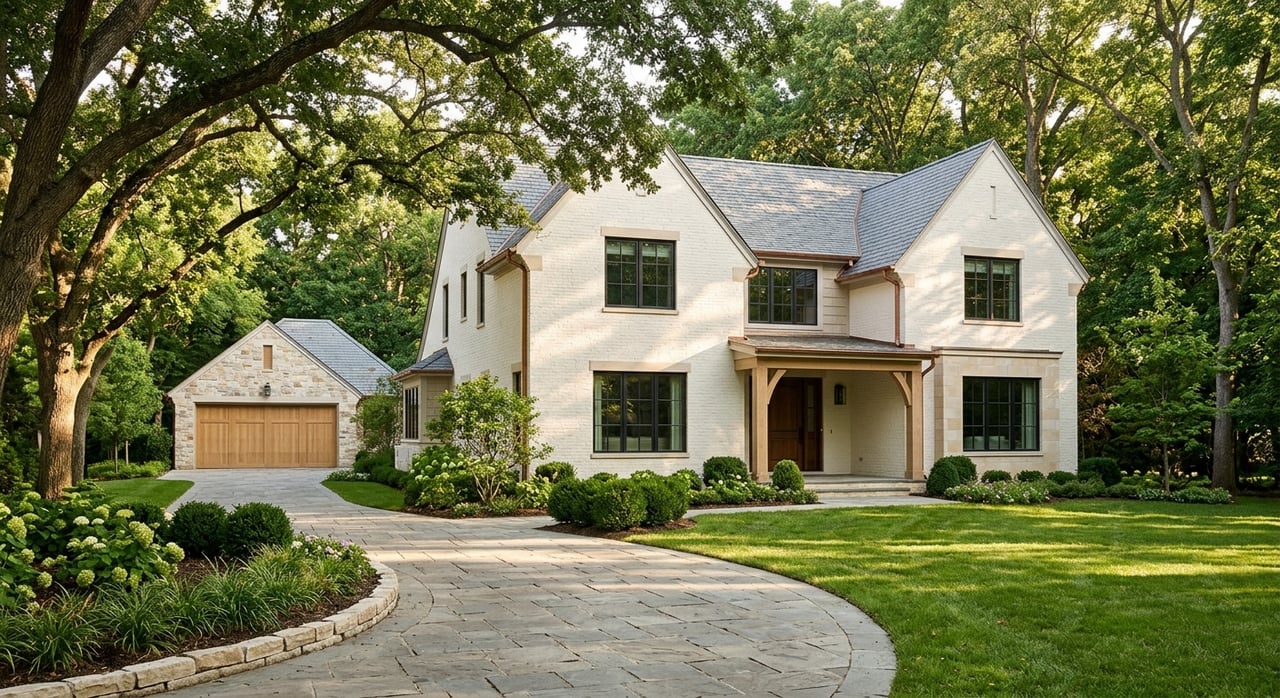
Street appeal in Pemberton Heights is not only about curb appeal in the usual sense. It is also about the neighborhood’s overall physical rhythm. The Pemberton Heights neighborhood association notes 30-to-40-foot setbacks from the street and heritage trees such as oaks, elms, and pecans.
That combination creates a shaded, established look that buyers notice immediately. Deep setbacks and mature canopy can make homes feel calmer, more private, and more connected to the neighborhood’s historic identity. In a market where many buyers are comparing homes emotionally as well as financially, that environment can support a premium.
Austin’s tree ordinance adds another layer. The city protects 19-inch protected trees and 24-inch heritage trees on private property. For owners, that can help preserve the very landscape features that contribute to long-term appeal, even if it also affects how future site changes are approached.
The Old West Austin neighborhood plan also emphasizes preserving green space and historic identity. That matters because in Pemberton Heights, value is tied not only to the house on one lot but also to the consistency of the surrounding streetscape.
Architecture Matters Beyond Square Footage
Pemberton Heights has a strong architectural identity, and that affects pricing. The neighborhood association lists Tudor Revival, Colonial Revival, Classical Revival, Spanish Colonial Revival, Italian Renaissance Revival, Craftsman, and Prairie School among the area’s main styles. The Old West Austin district document also notes that the historic character is largely intact.
That means buyers are not simply asking how big a home is. They are also paying attention to façade character, original proportions, material quality, and whether updates feel in step with the home and the street. In a neighborhood like this, design fit can matter almost as much as size.
For sellers, this is especially important when preparing a home for market. A carefully renovated house or a thoughtful addition may be viewed very differently from a property that feels visually disconnected from its surroundings. In other words, not all square footage is valued the same way.
Historic Context Can Influence Redevelopment
Because Pemberton Heights sits within a National Register historic district, redevelopment decisions can come with more review than in a typical Austin neighborhood. Austin’s Historic Landmark Commission says applications to demolish a contributing building in a National Register historic district can be postponed for up to 180 days. It also says other demolition or building applications in such districts are subject to public review.
That does not mean change cannot happen. It does mean that teardown or major rebuild strategies may involve more time and uncertainty. For buyers and investors, this is one reason lot value here is tied to more than just dimensions on a survey.
It also helps explain why homes with preserved character or sensitive updates can command stronger interest. In a market with constraints around change, existing architectural quality often becomes more valuable.
Pemberton Heights Has Micro-Markets
One of the biggest pricing mistakes in Pemberton Heights is treating the neighborhood as one uniform product type. Homes.com currently shows a median single-family sale price of $3,459,533 versus a median townhouse sale price of $780,000. The same page also shows asking prices ranging from an updated condo around $599,900 to estate homes near $6.95 million.
That is a very wide spread, and it tells you something important. Pemberton Heights is really a set of micro-markets within one recognized neighborhood. Condos, townhouses, renovated historic homes, and larger estate properties do not compete in the same way.
If you are a buyer, this means you should evaluate value within the right segment. If you are a seller, it reinforces the need for a pricing strategy built around your property’s subtype, lot, condition, and architectural fit, not a simple neighborhood average.
Recent Sales Need Careful Reading
With only a small number of annual transactions, recent sales in Pemberton Heights need context. Homes.com shows 12 sales over the last 12 months, and Zillow’s recent sold results point to a similarly thin sample. In a market this small, averages and medians can move sharply based on a handful of properties.
That is why the most useful comp is usually the closest match in style, lot size, renovation level, and overall market position. A broad median can be interesting, but it is rarely enough to support a serious pricing decision in this neighborhood.
This is also where local market conditions matter. In April 2026, the City of Austin had an average close-to-list ratio of 94.9 percent, and Travis County came in at 94.6 percent. Homes.com also reports a 9 percent median change from first list price in Pemberton Heights over the last 12 months, which suggests pricing discipline still matters even in a premium location.
Tax Appraisals Are Context, Not Pricing Strategy
If you own a home in Pemberton Heights, it is natural to look at the county appraisal when thinking about value. Travis Central Appraisal District says market value is the value based on what a property would sell for as of January 1, while taxable value is the figure used for property taxes. TCAD also says owners generally have until May 15 or 30 days after the notice is mailed, whichever is later, to protest an appraised value.
That information is useful, but it should not be confused with market pricing strategy. A county appraisal is a reference point. It is not a substitute for current, property-specific comparable analysis in a neighborhood where every detail can change how buyers respond.
What Really Drives Value Here
In Pemberton Heights, home values are driven by a combination of factors that are hard to reproduce elsewhere in Austin. The biggest ones are irreplaceable central location, limited housing supply, meaningful lot size, mature trees, deep setbacks, historic streetscape, and architecture that fits the neighborhood’s character.
Square footage still matters, of course. But in this market, buyers often place just as much weight on land character, preservation quality, and the overall feel of the property within the street and district. That is what makes pricing here more nuanced than a simple price-per-square-foot exercise.
If you are thinking about buying or selling in Pemberton Heights, a tailored strategy matters. Working with an advisor who understands how to read small-sample data, evaluate micro-markets, and position a property against the right comps can make a real difference. If you want a clear, data-driven perspective on value in central Austin, connect with Laura Greissing.
FAQs
What drives home values in Pemberton Heights most?
- The biggest drivers are central location, limited housing supply, lot size, mature trees, historic streetscape, and architectural character.
How many homes typically sell in Pemberton Heights?
- Public portal snapshots cited in the research show about 12 sales over the last 12 months on Homes.com and 10 recent sold results on Zillow, which points to a very small sample size.
Why are Pemberton Heights prices so different from Austin averages?
- Homes.com reports a 12-month median sale price of $2,696,250 in Pemberton Heights, far above the City of Austin and Travis County medians, largely because of the neighborhood’s close-in location, historic character, and limited inventory.
Do lot size and trees affect Pemberton Heights home values?
- Yes. Larger lots, deep setbacks, and mature canopy are key parts of the neighborhood’s appeal and help create privacy, shade, and a distinctive streetscape.
Does historic district status affect redevelopment in Pemberton Heights?
- Yes. According to Austin’s Historic Landmark Commission, demolition of a contributing building in a National Register historic district can be postponed for up to 180 days, and other demolition or building applications may be subject to public review.
Should you use Travis CAD values to price a Pemberton Heights home?
- TCAD values are helpful as context, but they are not a substitute for a comp-based pricing strategy tailored to the property’s style, lot, condition, and market segment.