Looking for a place that feels tucked away from the city without giving up quick access to Austin? Rollingwood stands out for exactly that reason. If you want a close-in location, a strong sense of community, and a neighborhood shaped by parks, walkability, and larger residential lots, this guide will help you understand what everyday life here can look like. Let’s dive in.
Why Rollingwood Feels Different
Rollingwood is an incorporated city on the west bank of Lady Bird Lake, set between West Lake Hills and Austin and right next to Zilker Park. The city describes itself as a close-knit community of just over 1,500 residents, which helps explain why it often feels more like a small town than a typical close-in Austin neighborhood.
That small-scale feel is a big part of the appeal. Even though you are near major Austin destinations and the Mopac and Bee Caves Road corridor, the local experience is more residential, walkable, and community-oriented. It is a rare mix of privacy, convenience, and connection.
Rollingwood Location and Access
One of Rollingwood’s biggest advantages is how close it sits to some of Austin’s most recognizable destinations. The city is near downtown Austin, next to Zilker Park, and positioned for easy access to major corridors that connect you to the rest of the city.
For many buyers, that means you do not have to choose between a quieter residential setting and an active Austin lifestyle. You can live in a smaller municipal community while staying close to trails, restaurants, offices, and central Austin events.
Close to Downtown Austin
Rollingwood Center is located at Mopac and Bee Cave Road and is described as about two miles from downtown. That gives you a practical reference point for how central the area really is.
If your routine includes commuting into central Austin, meeting clients, dining downtown, or spending weekends around the lake and trail system, Rollingwood offers unusual convenience for a place with such a tucked-away feel.
Easy Access to Outdoor Destinations
Rollingwood also benefits from direct proximity to Zilker Park and Austin’s hike-and-bike trail system. That matters if you value being near outdoor recreation without needing a long drive to get there.
For many people, that translates into a more flexible daily rhythm. You can fit in a walk, bike ride, or park visit much more easily when those destinations are close to home.
Daily Life in Rollingwood
The city highlights walkable streets used for exercise, dog walking, biking, and neighborhood play. That tells you a lot about the pace of life here. Streets are not just for getting from one place to another. They are part of how people experience the community.
A realistic weekday in Rollingwood may include a morning school drop-off, errands along Bee Cave Road, an afternoon stop at the park, and an easy trip into central Austin later in the day. That pattern is supported by the area’s park amenities, nearby services, and strong location.
A Park-Centered Community
Rollingwood Park is the city’s main civic amenity, and it plays a central role in neighborhood life. The park is divided into upper and lower sections, giving it a range of uses rather than a single-purpose layout.
The lower park includes playground areas, swings, a pavilion, and a community garden. The upper park includes multiple ball fields, playground equipment, adult exercise equipment, and the Doyle Moore Field House.
This setup supports more than casual recreation. City programs show that local youth sports groups use the fields, and the city notes that the walking trail and community garden grew through resident effort. That gives the park a lived-in, community-built character that many buyers find appealing.
Recreation Beyond the Park
Rollingwood also points to the Western Hills Athletic Club, a private pool club on Wallis Drive and Rollingwood Drive, as part of the local recreation landscape. While it is separate from the public park system, it adds to the area’s broader lifestyle options.
For buyers comparing west Austin neighborhoods, this matters because recreation in Rollingwood feels woven into daily life. It is not just about having amenities nearby. It is about how often you are likely to use them.
Shopping, Dining, and Everyday Convenience
Rollingwood’s commercial footprint is modest, but it covers many practical needs. The city notes a mix of eateries, retail businesses, and professional offices, while the local development corporation highlights retail, restaurant, office, and medical uses along the Mopac and Bee Caves Road corridor.
In other words, you are not moving here for a dense urban retail district inside city limits. You are moving here for a residential setting with useful commercial nodes very close by.
Shops at Mira Vista
One of the most practical nearby centers is Shops at Mira Vista on Bee Cave Road. Current tenants include Trader Joe’s, Panera Bread, People’s Pharmacy, Nothing Bundt Cakes, IVX Health, Austin Art & Frame, GOLFTEC, and Champions Westlake Gymnastics.
That tenant mix supports everyday convenience in a meaningful way. Groceries, quick meals, services, health-related needs, and activity-based errands can all be handled close to home.
Homes and Lot Sizes in Rollingwood
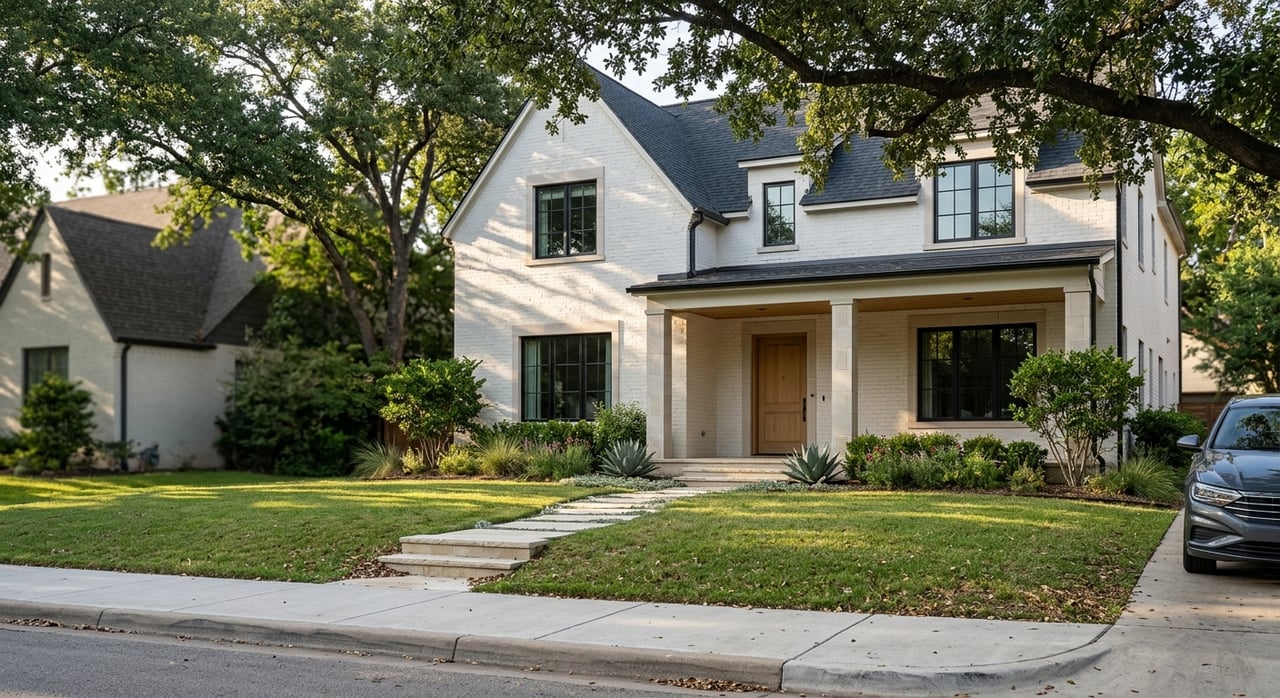
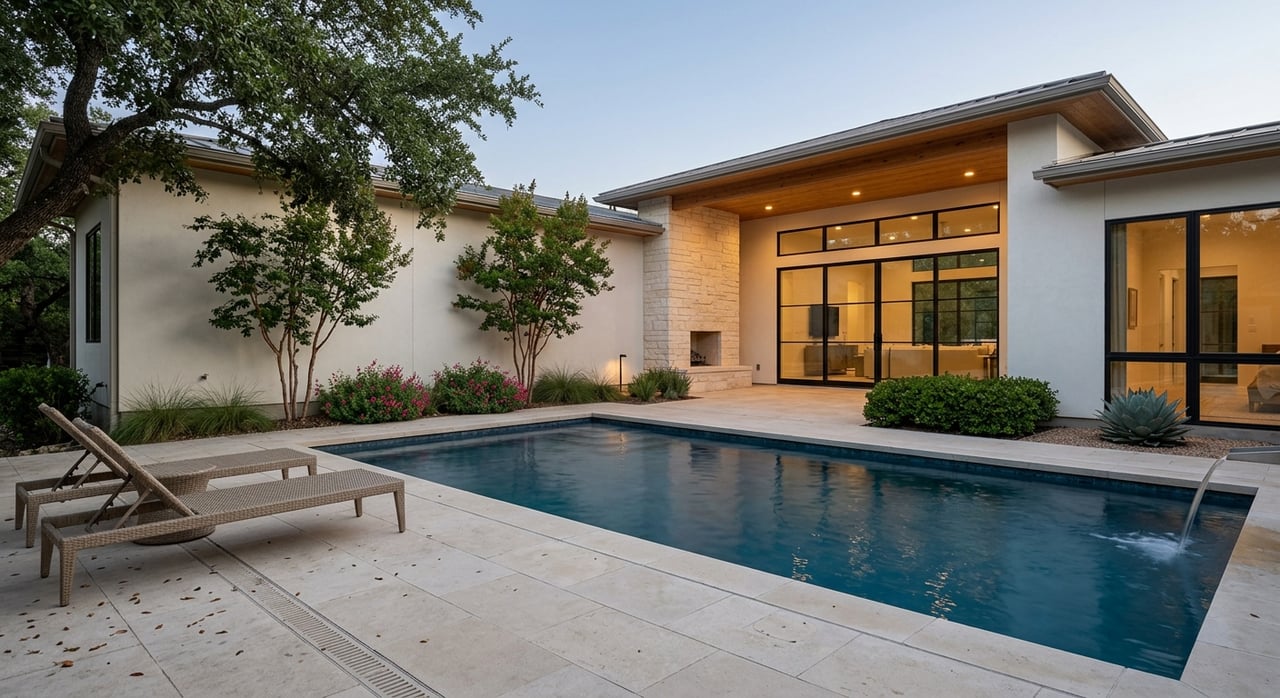
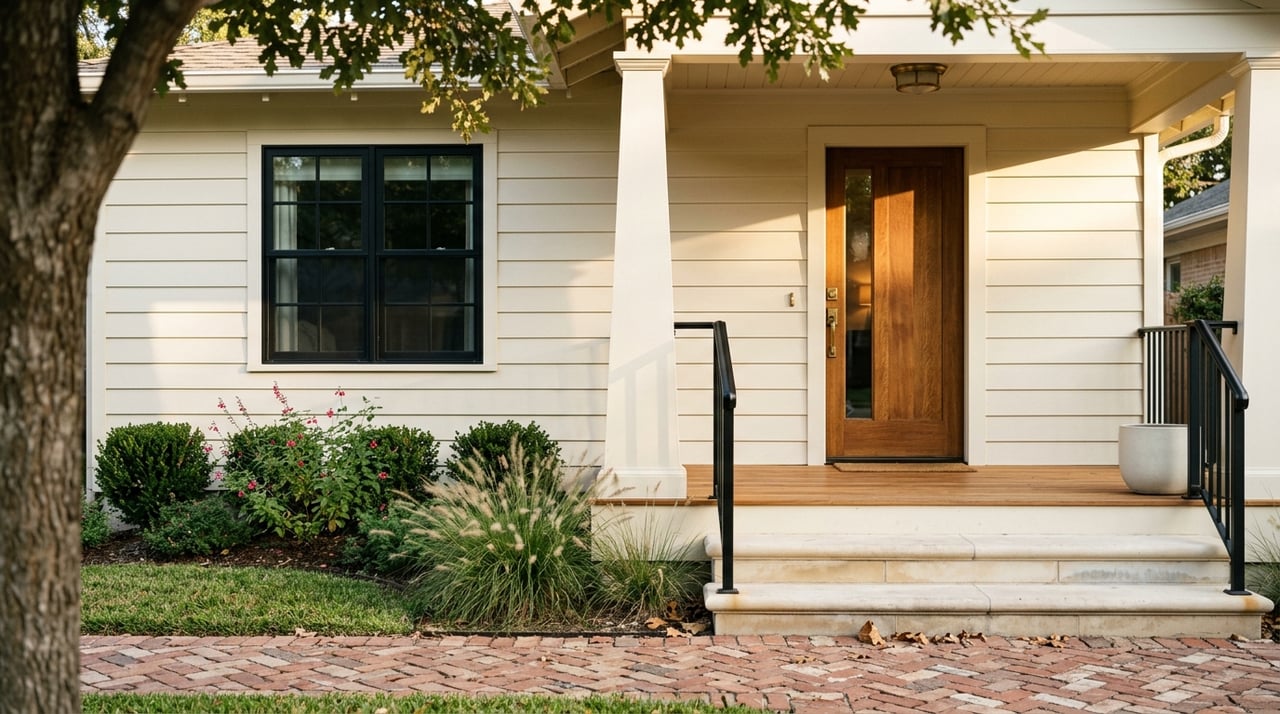
Rollingwood is primarily a single-family residential community. Recent examples in the area show both older homes and newer custom construction, which creates a housing mix that feels established but still evolving.
The sample homes in the research range from a 1979 home of about 2,202 square feet on 0.3 acres to a 2007 home of about 4,675 square feet on 0.4 acres. Other examples include homes on 0.35, 0.5, and 0.71 acres, which suggests that lot sizes often fall around one-third to one-half acre, with some larger parcels approaching three-quarters of an acre.
What That Means for Buyers
In practical terms, Rollingwood tends to offer a more substantial residential footprint than many close-in Austin locations. The built form leans toward detached homes on relatively generous lots rather than compact infill.
That larger-lot pattern is part of what gives Rollingwood its visual character. Mature residential streets, more separation between homes, and room for outdoor living all contribute to the neighborhood feel buyers often notice right away.
Older Homes and Newer Construction
Because the housing stock includes both older properties and newer custom homes, your options may vary depending on your goals. Some buyers may prioritize original homes with renovation potential, while others may focus on newer construction with more current finishes and floor plans.
This mix can be especially attractive if you want a neighborhood with established roots but still appreciate updated design and custom-home inventory. It also means that pricing and value often require block-by-block and property-by-property analysis.
Understanding the Market at a High Level
Rollingwood is a very small city, so public market snapshots can be noisy. The research report notes that a March 2026 Redfin snapshot showed a median sale price of $4.8 million and $957 per square foot, but only one home sold during that period.
That is an important reminder if you are researching the market online. In a place this small, short-term numbers can swing quickly and may not tell the full story. For buyers and sellers, that makes local context and careful comparable analysis especially important.
School Planning in Rollingwood
If school zoning is part of your home search, Eanes ISD directs families to confirm school assignments using its boundary map and the TCAD property search. Zoning is address-based, so the exact property matters.
That means it is smart to verify school assignment early if it will influence your decision-making. In neighborhoods with a limited number of available homes, confirming details upfront can save time and help you compare options more confidently.
Who Rollingwood May Suit Best
Rollingwood may appeal to you if you want a close-in west Austin location with a strong residential feel, park-centered community life, and quick access to downtown and outdoor amenities. It can also be a strong fit if you value single-family homes on larger lots and a smaller municipal setting.
For some buyers, the biggest draw is emotional. Rollingwood feels neighborly and established, yet it is still highly connected to the broader Austin lifestyle. That combination is hard to replicate.
If you are considering Rollingwood, the right strategy usually starts with clarity around your priorities. Location, lot size, home age, renovation tolerance, and day-to-day routine all shape what the best fit looks like here.
Whether you are relocating, moving within west Austin, or preparing to sell in this market, working with a calm, data-minded local advisor can make the process much more efficient. If you want tailored guidance on buying or selling in Rollingwood, connect with Laura Greissing.
FAQs
What is living in Rollingwood like compared with Austin?
- Rollingwood offers a smaller municipal feel with walkable residential streets, a strong community focus, and close proximity to downtown Austin, Zilker Park, and Bee Cave Road conveniences.
What types of homes are common in Rollingwood?
- Rollingwood is primarily made up of single-family homes, with a mix of older properties and newer custom construction on lots that often range from about one-third to one-half acre.
What park amenities are available in Rollingwood?
- Rollingwood Park includes playgrounds, swings, a pavilion, a community garden, ball fields, adult exercise equipment, and the Doyle Moore Field House.
What shopping and services are near Rollingwood?
- Nearby options include Shops at Mira Vista on Bee Cave Road, with tenants such as Trader Joe’s, Panera Bread, People’s Pharmacy, Nothing Bundt Cakes, IVX Health, Austin Art & Frame, GOLFTEC, and Champions Westlake Gymnastics.
How do you verify school zoning for a Rollingwood home?
- Eanes ISD states that school assignments are address-based, so families should confirm the exact zoned campus using the district boundary map and TCAD property search.
Is Rollingwood close to downtown Austin?
- Yes. Research cited in this guide notes that Rollingwood Center at Mopac and Bee Cave Road is about two miles from downtown Austin, which helps illustrate the area’s close-in location.